Shipping
A fully omnichannel Shipping platform that helps eCommerce merchants fulfill orders in a fast, easy, cost-effective, and competitive way.
My contribution
As the lead designer of the squad, I managed design communications, set expectations, and coordinated timelines. I worked closely with product managers, content teams, localization experts, developers, and other designers to ensure alignment across the project.
I facilitated stakeholder workshops to define project goals, conducted interviews with merchants to uncover their most urgent needs, and led usability testing sessions using interactive prototypes. During the design phase, I mapped out user flows for each app feature and collaborated with developers to ensure the designs were both practical and efficient.
The team
Product manager
Software architect
2 Full stack developers
1 Front end developer
Quality tester
Content writer
2 Product designers
Context
To ship their orders, Lightspeed eCommerce merchants need to create and connect accounts with external shipping applications. These workflows are time consuming, have a lot of friction and require that merchants manually sync information between the different systems, making it very error-prone.
Shipping is one of the major expenses eCom merchants have to bear.
Customers expect free shipping. Merchants need to absorb the cost of shipping themselves.
Lightspeed focuses on supporting small and medium businesses in their path to growth. For over 15,500 merchants in different verticals, with different shipping volume and needs, shipping is one of the key delayers in merchants becoming fully transactional.
This has a negative impact on their relationship with their own customers, and makes it so complex that it is hard for managers/owners to delegate the task.
To ship their orders, Lightspeed eCommerce merchants need to create and connect accounts with external shipping applications. These workflows are time consuming, have a lot of friction and require that merchants manually sync information between the different systems, making it very error-prone.
Goals
For LS shipping , we wanted to replace the broken journey with a frictionless flow, giving merchants the ability to ship orders in a fast, easy, cost-effective, and competitive way without leaving Lightspeed.
For example, a merchant who does ~200 eCom orders per month with an average shipping label cost of $10 could save up to $1800 per month.
Challenges
Shipping is a long process involving many steps, systems and users. The scope of the project was very big, and technically challenging. It covering a long complex journey involving tracking, address validation, cancellation and returns, voiding labels, manifests and packing slips, insurance, customs, currency conversions, differences in how carriers work in different regions, while integrating with both old systems and external systems.
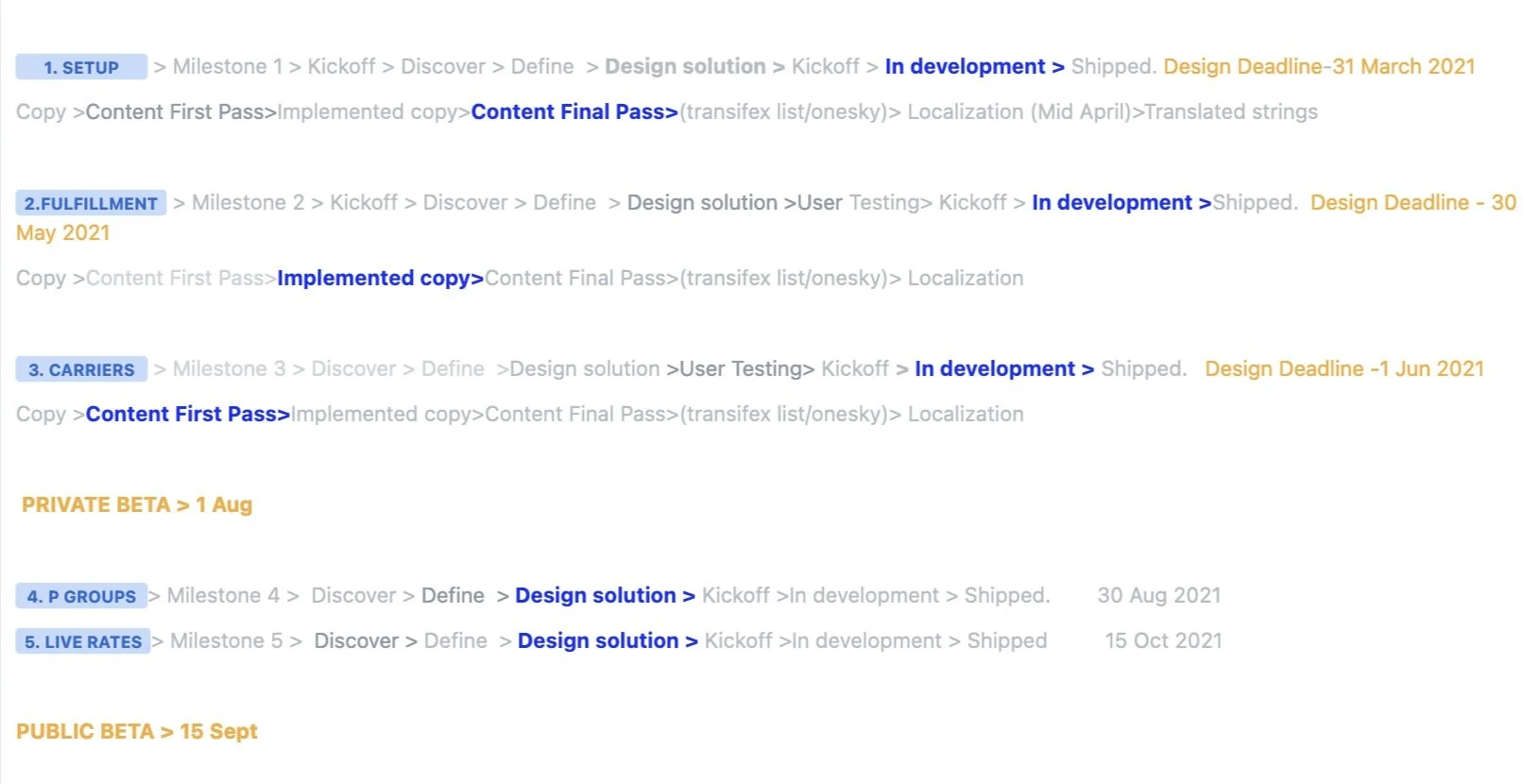
The Product Manager structured the projects into milestones, like Setup, Fullfilment and Carriers.
Setup
Merchants need to set up shipping rates for their customers, which vary based on factors like distance, order value, delivery time, carrier, weight, and size. After receiving an order, they buy a shipping label and fulfill the order. Since each business has unique needs, Lightspeed needed to offer flexible shipping options while keeping the interface simple and clear for merchants to navigate.
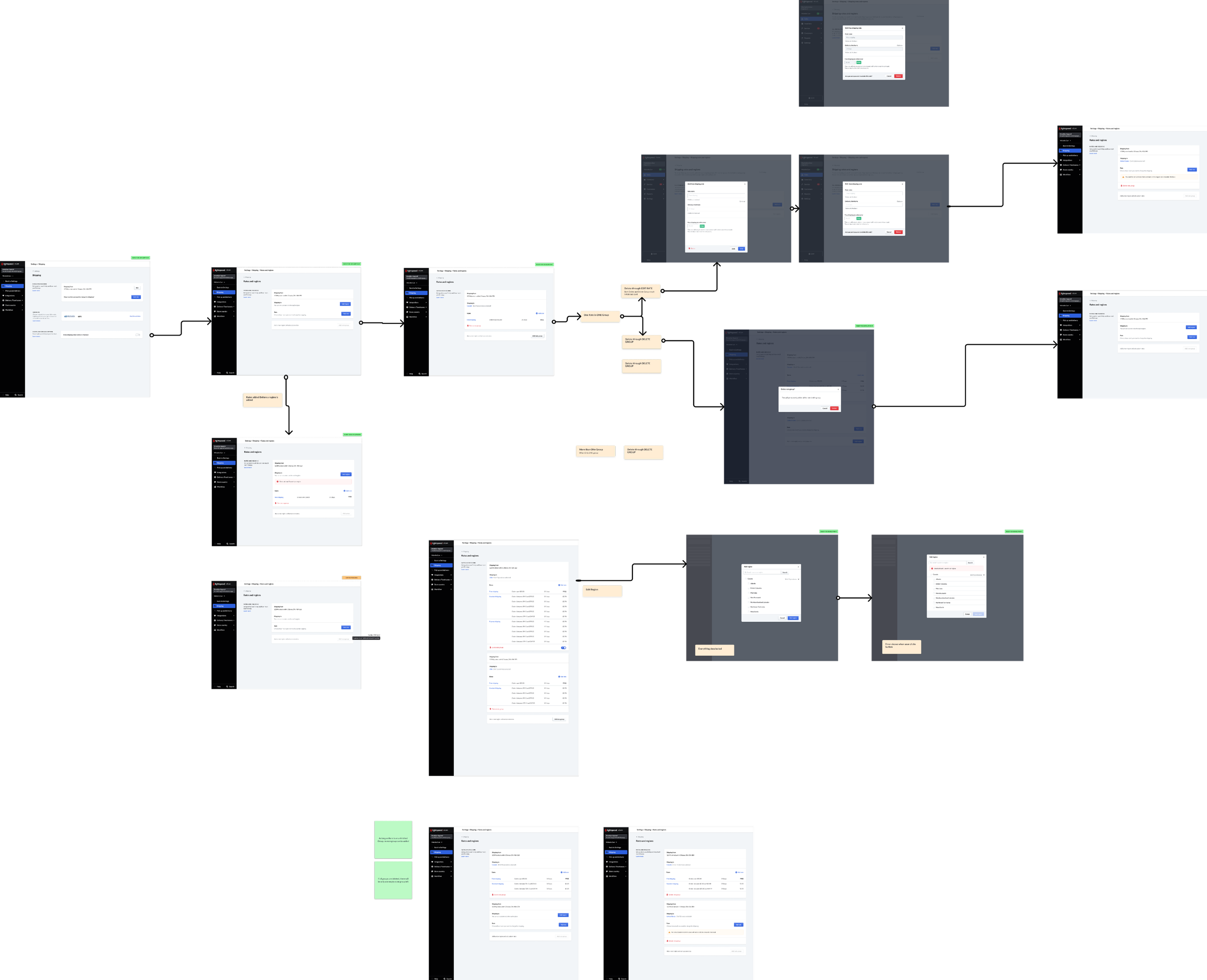
“Overview first, zoom and filter, then details-on- demand”
Order fulfillment
Order fulfillment has its own demands - it would live alongside old existing components and flows that we could not change. We could not do much in UI improvement, but we could offer merchants incredible value by allowing them to ship and track their orders without leaving the system.
Learnings
This was a very big long project, with many milestones at different stages in progress at the same time. Keeping clear communication and a shared overview was really important.
While your Setup milestone was already in development, fulfilment in its first iterations and carriers in discovery, they are all part of the same experience for the user.
A year into Lightspeed Shipping, Lightspeed acquired Ecwid, which already had a shipping module, putting our project on hold while management assessed the best solution.
I also gained valuable insights into the unique needs of small merchants and into how shipping works.