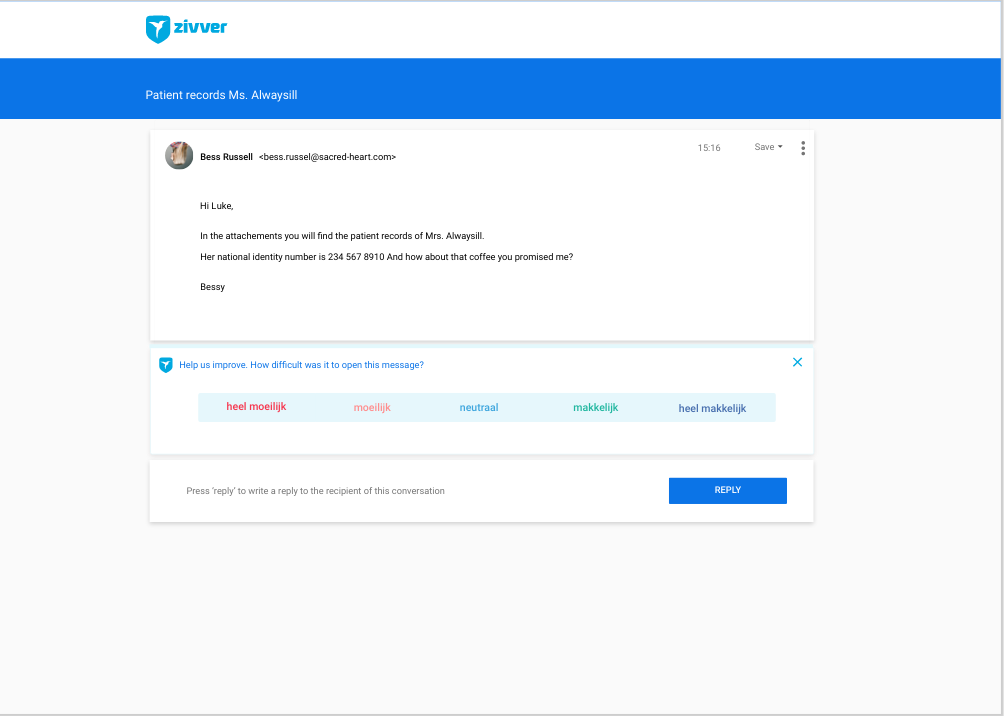
scale up time at ZIVVER
CONTEXT
ZIVVER is a fast-growing scale-up offering secure email and data transfer solutions.
I joined as a Senior UX Designer to help formalize some design processes and improve the capacity of UX to bring business value.
UX maturity levels (source: 6 Indicators of an Organizations User Experience Maturity Level)
The company is 5 years old. Looking at a UX maturity model bellow, they were more in a stage 2 - there was some design to ‘make pretty’, usually after or at the same time as coding, a little interaction design and no UX research or testing. The development process was not formalized around user centered practices either.
What activities would bring UX maturity up? How do you create sustainable UX processes where there are none?
I worked closely with developers, QA, product owners and the other half of our fantastic UX team of two.
It was the first time for ZIVVER in
Alignment personas
Empathy Maps
Jobs to be done
User Journeys
User interviews
User feedback tied to user journey
Socializing Research
Service Blueprinting
Design System groundwork
Accessibility audit
To make the company’s value creation efforts more effective, creating a shared understanding of our customers across stakeholders in the organization, and aligning efforts with other teams. With that goal in mind, we run workshops, did presentations, found creative ways of socializing user research and feedback, and introduced design thinking
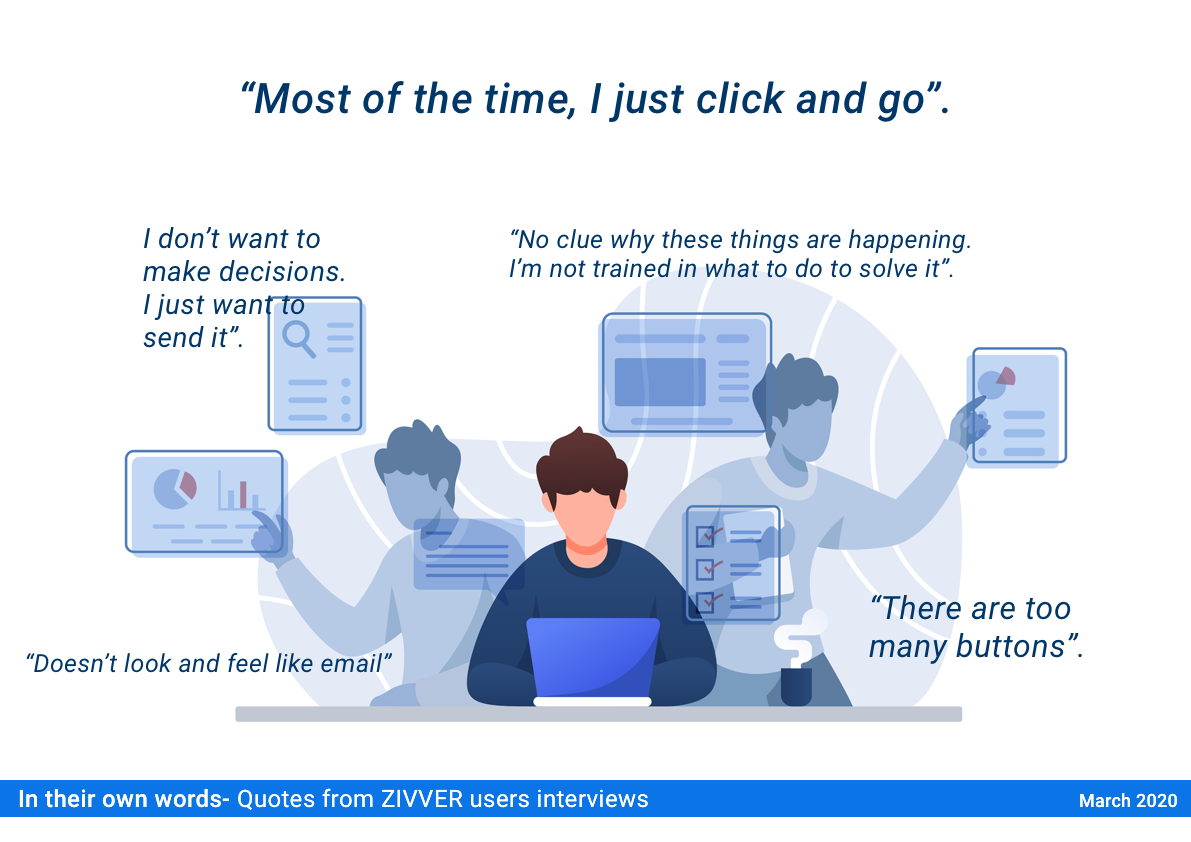
Easy socializing of research - Print and paste around the office
I also coordinated efforts towards consistency and simplicity across the products.
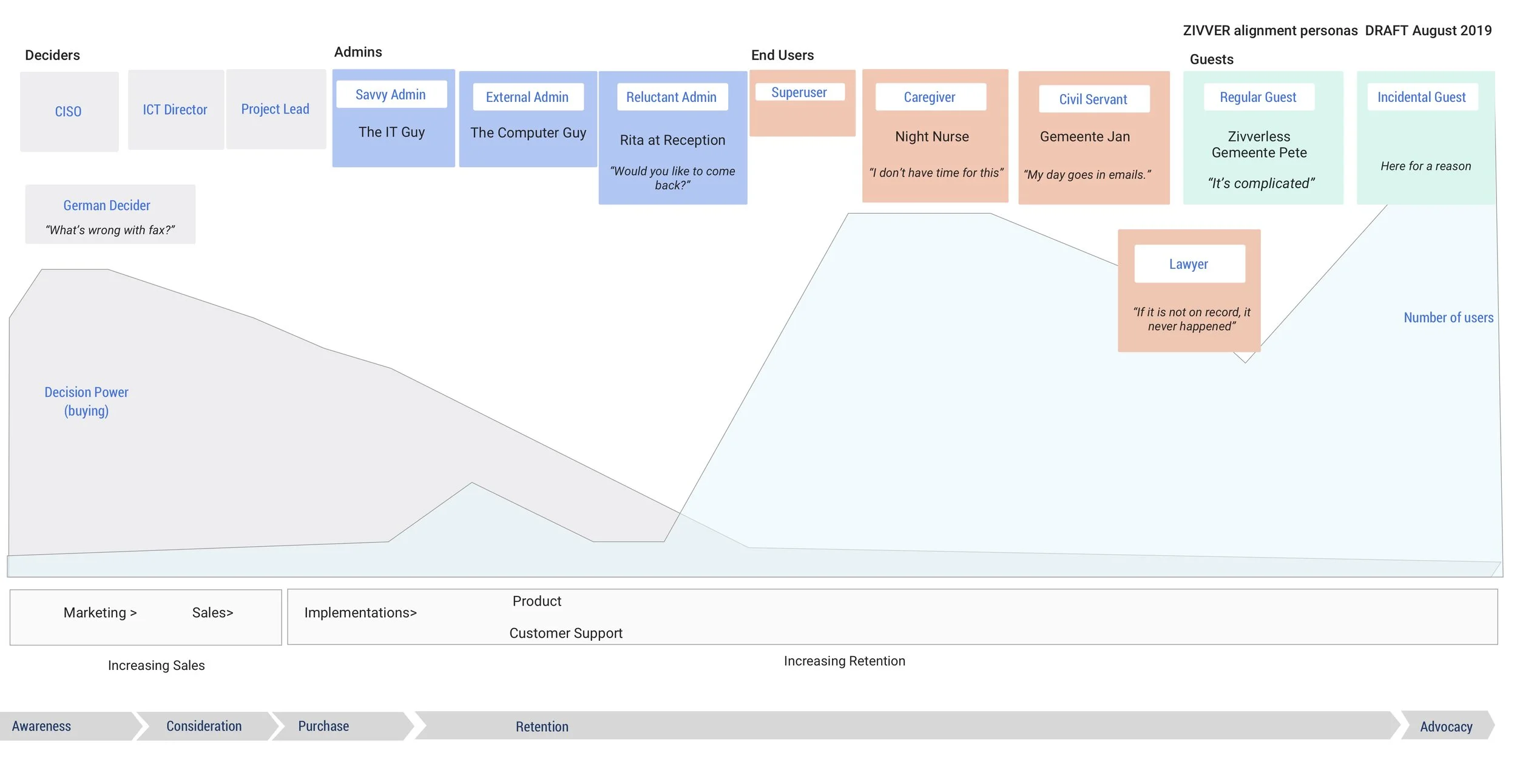
Simplified proto-persona timeline
Why it was important to introduce Design Thinking?
Design Thinking ensures your products and experiences are desirable but also viable before they are designed and developed.
It aligns customer and business value - with less technical and UX debt.
Also, Design Thinking is inclusive - not just for designers - and increases alignment through collaboration.
Simplifying and consistency - chips and colours